
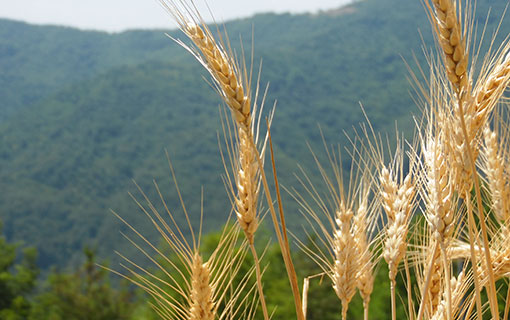
We are men of spelt
Share
We are men of spelt , even though we've only been eating corn polenta for a few centuries. The men of corn— hombres de maíz , according to the apt title of a novel by Guatemalan Nobel Prize winner Miguel Ángel Asturias—are the Mesoamerican peoples. Those created from the ears of yellow and white corn, those for whom corn, men, and gods are a whole that cannot and must not be separated.
Corn has been, and still is, the staple of the diet of the peoples of Mesoamerica for centuries, along with beans, squash, and chili peppers.
Spelt, along with some other cereals and legumes, has been the basis of our diet since ancient times . We find it in the Bible: "Take wheat, barley, beans, lentils, millet, and spelt, and make bread of them..." (Ezekiel 4:9), in ancient Egypt, where they made beer and bread from it, and in Greece during the time of Homer, where it was also part of sacrificial rites. But it is the Latin populations of which we know with certainty that spelt formed the basis of their diet. According to Pliny the Elder, spelt was practically the only cereal used in Rome during the first centuries, and was never abandoned even when its cultivation was accompanied by others.
It was considered a symbol of divine nourishment, so much so that even the pestle used to separate the grains from the ears, the pilum , was dedicated to a god, Pilumnus , protector of newborns and mothers in childbirth. A god of life!
The second king of Rome, Numa Pompilius, had established the Fornacalia , in honor of the goddess Fornax , who protected the ovens where spelt was toasted; in June, on the occasion of the feast of Carna, the tutelary deity of the vital parts of the human body, a puree of broad beans was added to the spelt flour , which was supposed to promote the healthy growth of the internal organs of the youngest. Near the bed of the Flamen Dialis , the priest assigned to the special cult of Jupiter, a type of ritual focaccia made from spelt, the fertum , made by kneading it with milk, sheep's liver and salt, and strues , sweet layered cakes, were placed.
Even when wheat prevailed in the daily diet, spelt remained essential in religious ceremonies concerning the rex sacrorum , the magistrate who presided over sacrifices, and the vestals.