
proposto da: Salumeria Toscana
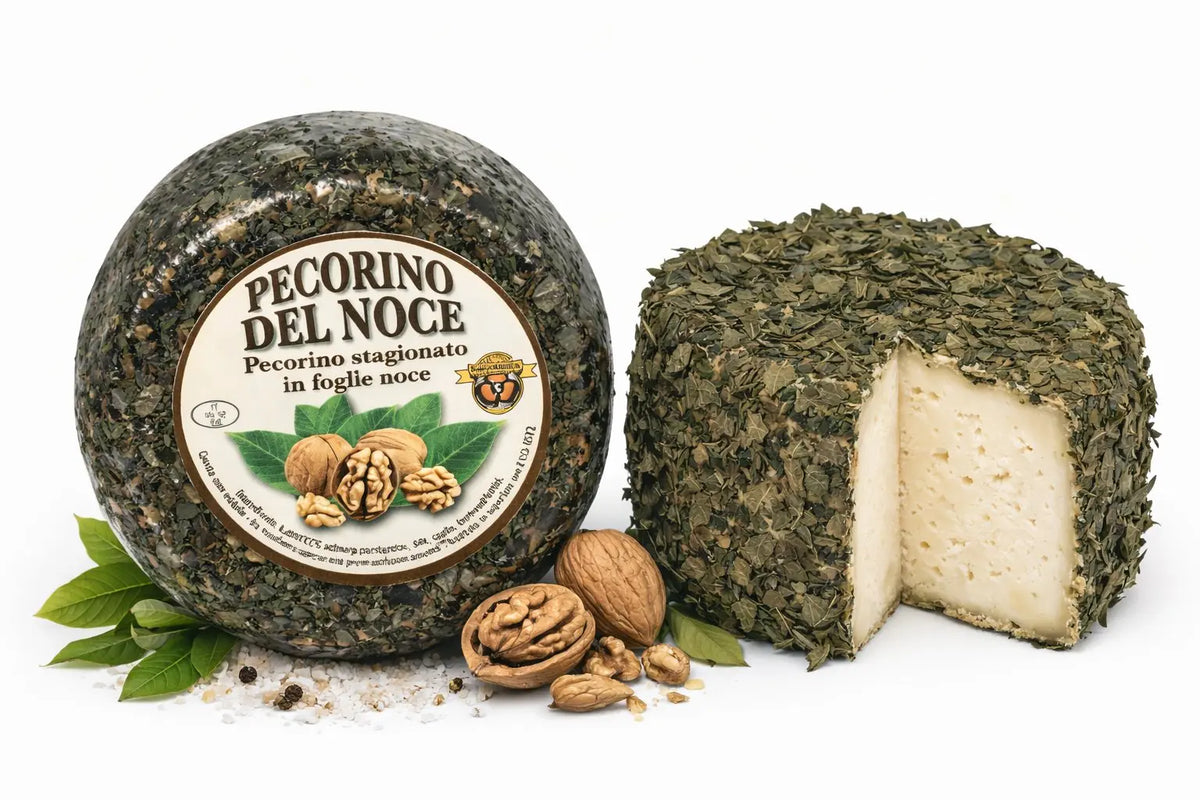
Pecorino aged in walnut leaves, Caseificio Maremma, 550 g
Pecorino aged in walnut leaves, Caseificio Maremma, 550 g
Couldn't load pickup availability
Pecorino aged in walnut leaves is a sheep's milk cheese that matures for 2 months wrapped in walnut leaves, an ancient technique from the Tuscan rural tradition: the rind becomes dark and fragrant, while the white, firm paste develops a more intense flavor. It is made by Caseificio Maremma in 550 g wheels.
Aging in Walnut Leaves: An Ancient Art
Aging in walnut leaves is one of the oldest cheesemaking practices in Italian rural tradition. Walnut leaves are not merely a decoration; they play an active and decisive role in the cheese's maturation process.
Natural tannins in walnut leaves act as natural preservatives, protecting the cheese rind during aging. L'moisture retained by the leaves creates an ideal microclimate around the wheel, slowing water loss and encouraging slow, complex flavor development. The result is a distinctive rind: dark and fragrant, with earthy, vegetal notes, surrounding a white, firm interior with a more intense flavor than conventionally aged pecorino.
Two months of patience, walnut leaves, and the skill of Tuscan cheesemakers: these are the ingredients of a cheese you won't find in large supermarkets.
Technical Sheet: Pecorino Aged in Walnut Leaves
| Characteristic | Detail |
|---|---|
| Product | Pecorino aged in walnut leaves |
| Origin | Tuscany, Italy |
| Milk | Sheep's milk |
| Weight | 550 g |
| Aging | 2 months in walnut leaves |
| Technique | Wrapped in walnut leaves, traditional method |
| Paste | White, firm, intense flavor |
| Rind | Dark, fragrant, flavored by walnut leaves |
| Packaging | Vacuum-packed |
| Storage | 2-4°C |
| Allergens | Contains milk, contains tree nuts (walnuts) |
How to Enjoy It at Its Best: Tuscan Tradition
Pecorino in Walnut Leaves calls for a different approach from fresh pecorino or conventionally aged PDO pecorino. The aging technique creates a product with a dual personality: an outer rind scented with walnuts and a more delicate interior.
Serving temperature: Bring the cheese to room temperature at least 30 minutes before serving. Unlike fresh cheeses, this pecorino is at its best between 16 and 20°C: the cheese softens, the fats melt, and the aromatic bouquet of walnut leaves becomes fully perceptible.
Cutting: Cut into wedges or slices that are not too thin; the firm texture holds up well to a knife. You can leave a strip of rind on the slice for anyone who wants to taste its aroma, but it is not necessary to eat it.
Classic pairings
- Chestnut honey: the most intense honey in the Tuscan tradition, and the only one that stands up to the savory flavor of aged pecorino
- Grape mostarda: the tangy sweetness of the grapes perfectly balances the bold flavor
- Toasted walnuts: to reinforce the aromatic notes from aging
- Tuscan olives in brine: the savory-rich contrast is one of the most popular pairings on Tuscan cheese boards
In the kitchen
- Shaved over arugula and pear salad: a classic pairing in modern Tuscan cuisine
- Grated over truffle pasta: the savory flavor of aged pecorino enhances the earthy notes of truffle
- Pecorino and walnut risotto: stirred in at the end of cooking with a drizzle of extra-virgin olive oil and toasted walnuts
- Exceptional cheese boards: the star of any selection of artisanal Tuscan cheeses
Pairings: The Tuscan table
Wines
- Brunello di Montalcino: the quintessential great Tuscan red, able to stand up to the complexity of pecorino aged in walnut leaves
- Morellino di Scansano: more accessible than Brunello and just as well suited to flavorful cheeses
FAQ: Aged Pecorino in Walnut Leaves
Are the walnuts inside the cheese or only on the rind? Walnuts are not incorporated into the interior paste; the cheese is wrapped in external walnut leaves during aging. Over the 2 months of maturation, the leaves impart their natural aromas and tannins to the rind, creating a unique aromatic profile without altering the interior paste. Those expecting walnuts in the cheese itself will find something more refined: a cheese that tells the story of walnuts through its aroma and rind.
How does it differ from other Tuscan pecorino cheeses? Aging in walnut leaves is one of the rarest and most traditional techniques in Tuscan cheesemaking. Compared with conventionally aged Pecorino Toscano PDO, this pecorino has a darker, more aromatic rind, with earthy, vegetal notes imparted by the leaves. The interior paste is moister and the flavor more complex. Compared with Mini Pecorino Rosso Colline Maremmane, aged for 40 days, this cheese matures for 2 months, giving it a bolder flavor and firmer texture.
Does it contain nuts as an allergen? Yes, prolonged contact with walnut leaves during aging means this product is classified as containing tree nuts (walnuts). Anyone with a walnut allergy should take care.
Share